Creamy Thermomix carbonara with pasteurized eggs
The creamy carbonara I make at home: the eggs cook in the bowl at 85°C, so it's safe even during pregnancy and for young children.
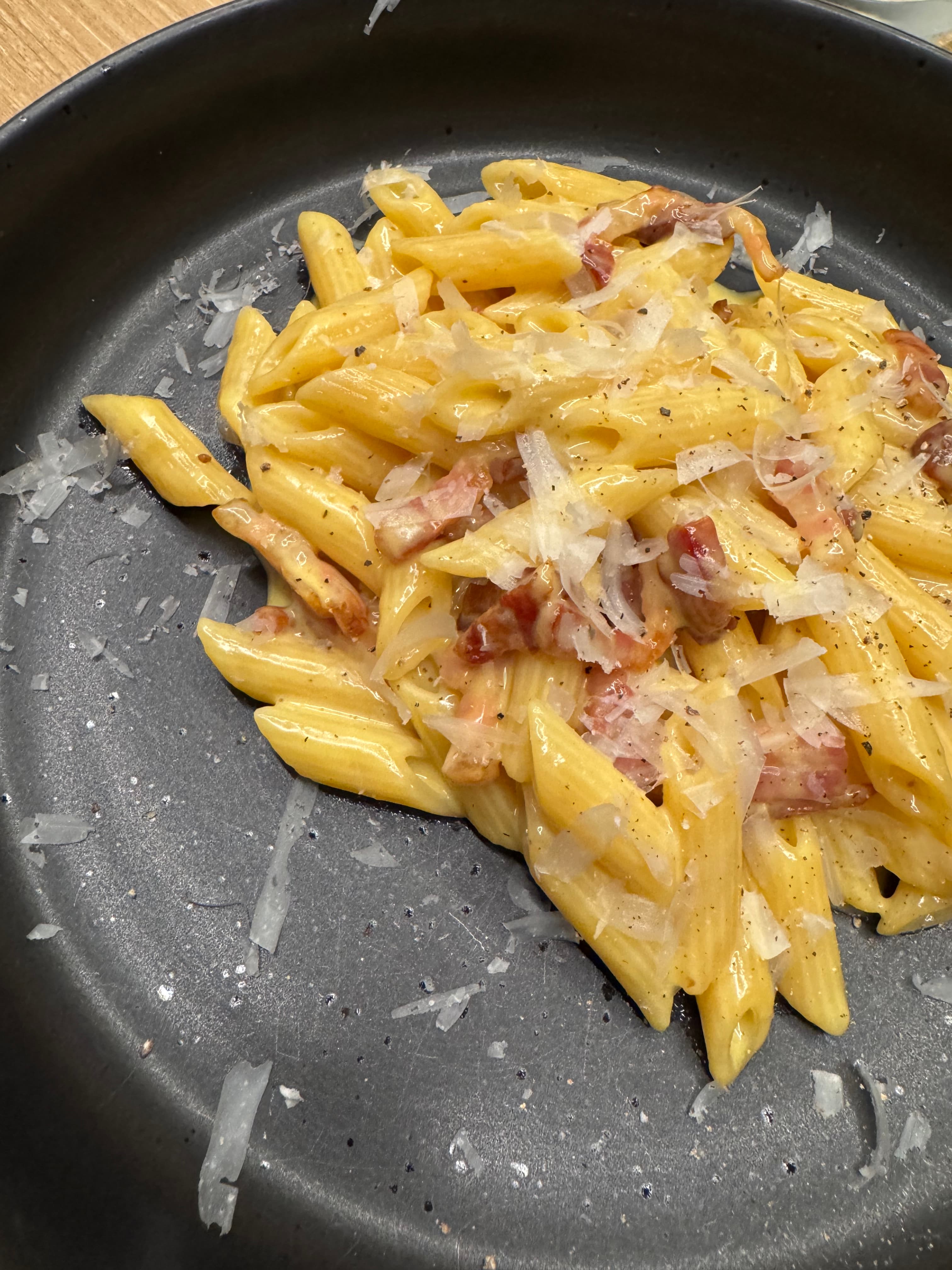
This is our home carbonara: Riccardo's recipe, designed to be good for everyone, young children and expectant mothers included. The trick is cooking the eggs in the bowl at a low temperature, so they stay creamy but pasteurized, never going near an open flame.
The extra touch is loosening the cream with a little warm pasta water before tossing it through: it makes everything more fluid and stable, without the risk of it splitting.
What "pasteurized" means here and why it matters
Traditional carbonara is made with raw eggs, cooked through by the heat of the pasta alone. It works, but the temperature reached is unpredictable: in some spots the egg stays essentially raw.
Here, instead, the eggs cook in the bowl at 85°C for 10 minutes, in a controlled and even way. It's the same logic as pasteurization: a high enough temperature, held long enough, drastically reduces the microbiological risk typical of raw eggs.
That's why this is the version I make without worrying for young children and for anyone in the family who is pregnant. That said, I'm not a doctor: if you have specific guidance from yours, follow it.
The extra practical benefit is that the cream is stable. You don't risk ending up with scrambled eggs at the last second, which is the classic carbonara nightmare.
Why the pancetta fat needs to cool first
It sounds like a fussy detail, but it isn't. The fat straight out of the pan is much hotter than 85°C: pouring it in boiling hot over the eggs in the bowl cooks them instantly and you end up with lumps before you've even started cooking properly.
Letting it cool for a few minutes fixes this. And never throw it away: it carries all the flavor of the pancetta, and it's what makes the cream tasty without adding anything else.
The pasta water: how much and how
An espresso cup, no more, and cooled slightly for the same reason as above. The starch released by the pasta is a natural binder: added a little at a time, it makes the cream fluid and velvety instead of thick and gluey.
Cook the pasta in lightly salted water: between the pecorino and the pancetta, the dish is already salty enough on its own.
Pancetta or guanciale?
Guanciale is the traditional Roman choice: fattier, more flavorful, melts better. Pancetta is easier to find and leaner, and it's what I usually use. Either works, the important thing is to slice it thin and get it really crisp: it's the only source of texture in an otherwise entirely creamy dish.
The most common mistakes
- Tossing it together over the heat: turn the pan off before combining pasta and cream. The residual heat is more than enough.
- Adding the cream all at once without loosening it first: it turns thick and grainy.
- Pecorino grated too coarsely: if it's not fine enough it won't melt and stays in little clumps.
Variations
- Pecorino and Parmesan, half and half, if you prefer a milder flavor.
- Zucchini carbonara: add sautéed zucchini rounds instead of (or alongside) the pancetta, as in the rice with salmon and zucchini.
- Long or short pasta: spaghetti for tradition, rigatoni if you like the cream to get inside the tube.
Storage
Carbonara is eaten right away, no exceptions: reheated, the cream splits and the pasta turns rubbery. If you really have leftovers, the next day you can turn it into a baked pasta frittata.
Ingredients
- 300 g pasta (spaghetti or rigatoni)
- 180 g thinly sliced pancetta (or guanciale)
- 1 whole egg
- 3 egg yolks
- 100 g grated pecorino romano
- black pepper to taste
Method
- 1
Cut the pancetta into thin strips and fry it in a pan until nicely crisp. Drain the pieces and set them aside; collect the rendered fat in a small bowl and let it cool slightly (not piping hot).
- 2
Fit the butterfly whisk into the bowl. Add the whole egg, the yolks, the pecorino, the pepper and the cooled pancetta fat.
- 3
Cook until you get a smooth, thick cream
⏱ 10 minvel 3.5🌡 85°C - 4
Meanwhile cook the pasta in lightly salted water. Before draining, scoop out an espresso cup of the cooking water and let it cool for 1-2 minutes.
- 5
Pour the cream from the Thermomix into a bowl and loosen it by adding a little cooking water at a time, stirring until it becomes soft and velvety: this keeps the carbonara fluid and stable.
- 6
Put the drained pasta in the pan with the crispy pancetta, heat off, pour the loosened cream over it and stir quickly until well combined and creamy.
- 7
Serve with a generous dusting of pecorino and freshly ground black pepper.
Tip
The eggs cook in the bowl at 85°C instead of raw: that's why this is the carbonara I make without a second thought for young children and for anyone in the family who is pregnant.
You might also like
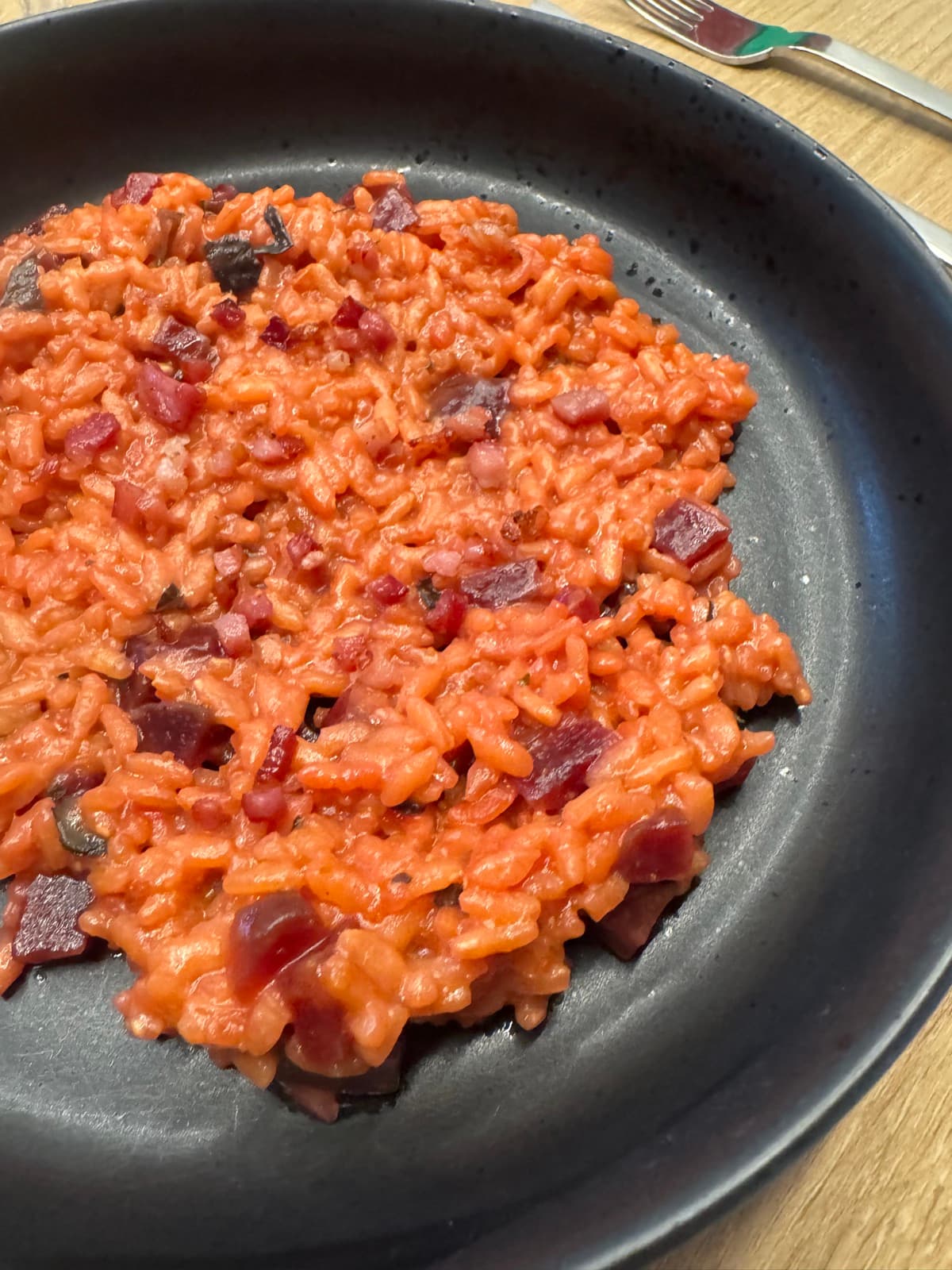
Beet and speck risotto with the Thermomix, vivid red, no wine
Vivid red beet risotto: part blended to a purée for the color, part diced small for texture, topped with crispy speck bits.
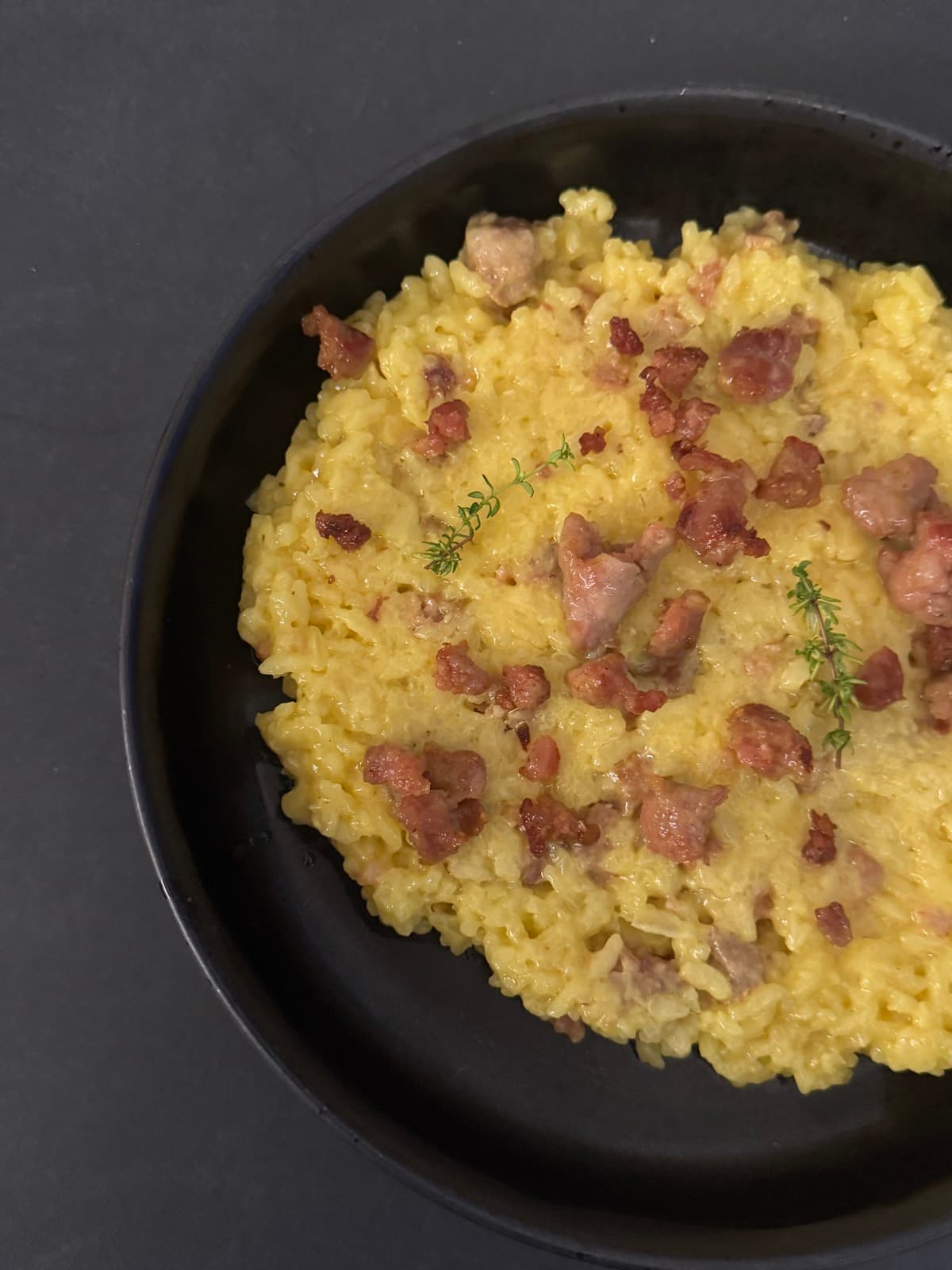
Saffron and sausage risotto with the Thermomix, no wine, creamy
Bright yellow risotto with sausage (in the base and crispy on top) and fresh thyme, no wine: safe for kids too, saffron stirred in right at the end.
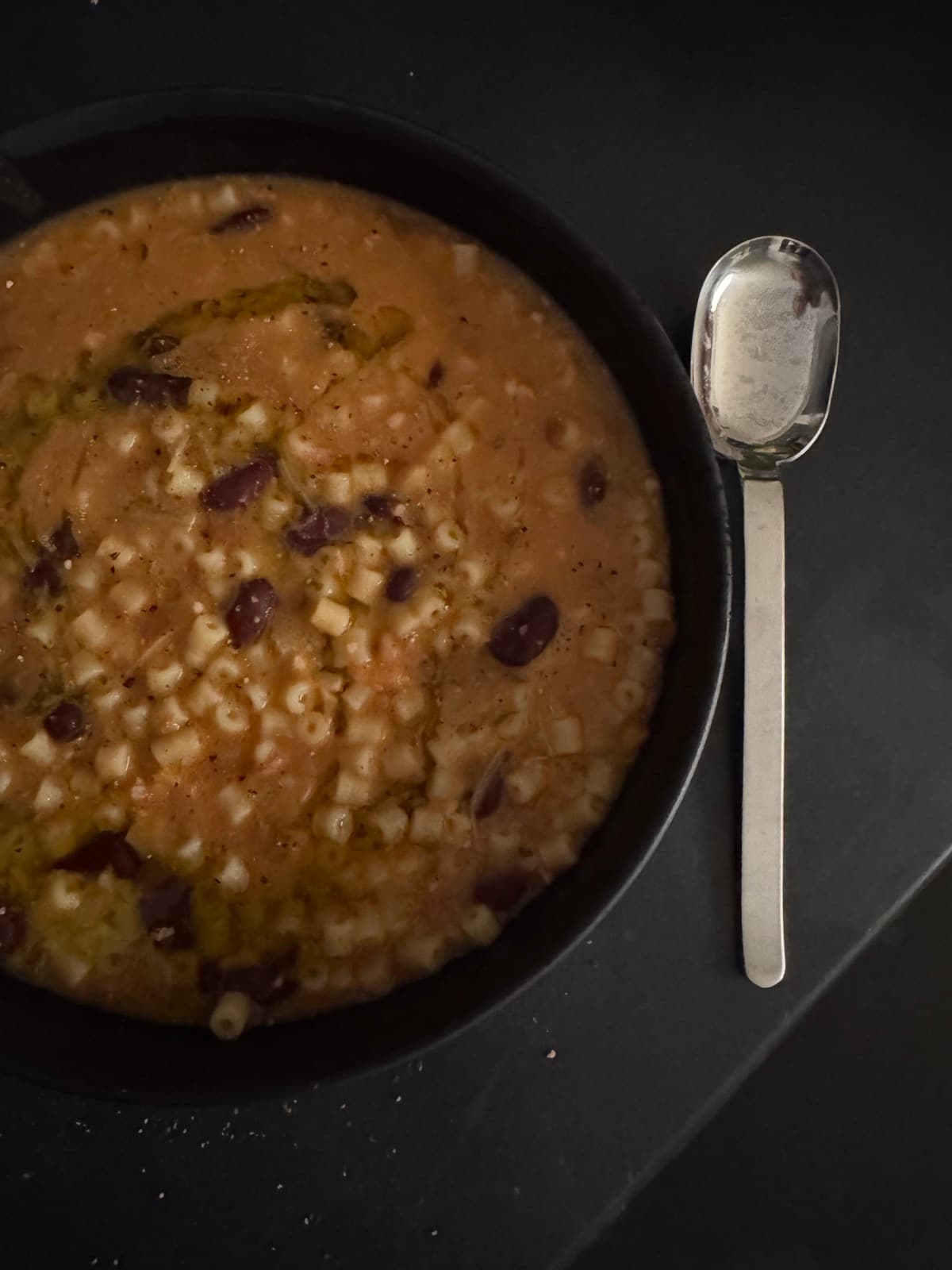
Creamy pasta e fagioli with the Thermomix, ready in 30 minutes
Creamy, comforting pasta and bean soup: the secret is blending half the beans for a dense base, then cooking the pasta straight in the broth.
Message me, I reply within the day
Price, recipes, how the demo works: ask me anything on Instagram, no strings attached. If you're in the area and want to try it in person, we can set up a demo whenever suits you.
I run in-person demos in South Tyrol (Alto Adige), Italy. Wherever you are, the recipes on this site are yours to use freely.
Message me on Instagram →